Camp Job vs “Real Job”

Rant alert: I’m about to get on my soapbox.
soapboxIn the past few weeks I’ve had some conversations about working at camp, in which a non-camp job was referred to as a “real job”. For example: You’ve interviewed an awesome candidate for a cabin leader position, and offer it to them, only to have them tell you that their parents have advised them to get a “real job” instead. Therefore implying that working at camp, somehow, is less worthy or valuable than other types of summer employment.

Unsuprisingly, I disagree with that. Not just because I’ve spent the last five years of my life working hard at something that some people think isn’t “real”, but also because I honestly do believe that camp has just as much benefit for our staff as it does for our campers. So just to set the record straight, here are a few myth busters to illustrate that working at camp is as ‘real’ as it gets.

Myth #1: You can’t make money working at camp.

Truth: Is camp the highest paying gig around? Probably not. It’s also not the lowest, especially when you consider that your pay and hours of work at camp are guaranteed – not like a service job where you are dependent on how many hours you are scheduled. I know SO many people who took summer jobs at grocery stores, restaurants, retail stores, and other jobs that rely on being given shifts on a schedule, who assumed they would get full-time hours over the summer. Very few of them actually worked the number of hours they originally expected. At camp, not only is the exact amount of pay you will receive identified on your contract, in most cases you also get paid in a lump sum at the end of the summer – which means you haven’t spent the whole thing as you went along.

Myth #2: Camp staff just play all day.

Truth: I dare you to say this to someone who has actually worked at camp. I. Dare. You. Experienced camp staff know that we do much more than just play at camp. We are activity planners, supervisors, first aid responders, substitute parents, problem solvers, conflict mediators, team players, leaders, role models… Do I need to go on? (We do play a bit too… (and we play HARD) but who said that was a bad thing?)

I challenge all parents to make a list of the qualities they would like to see in their grown children, as they join the adult world. Integrity, empathy, respect for others, truthfulness, responsibility, compassion, self respect… working as a camp counsellor requires a young person to cultivate all of these personal qualities, and more.

Julie Hartley, Centauri Arts Camp


Myth #3: Working at camp doesn’t give you valuable job experience unless you want to become a teacher.

Truth: There has been a lot of discussion over the last few years about whether or not our education system is succeeding in preparing children for the real (and ever changing) world of work. Read Lynchpin by Seth Godin and you will begin to understand how important it is for job candidates to develop creativity and problem solving skills in order to make themselves, in Seth’s own words, ‘indispensible’ to the workplace. How much creativity and problem solving are you likely to exercise working at a fast food restaurant? Is THAT considered more valuable “job experience”? I would argue that you are going to learn very little about being “indispensible” by working in fast food, because (among other things) there is little to no opportunity for autonomy.

At camp, however, there are countless opportunities to stretch and display your creativity, ingenuity, and leadership. I have designed entire camp programs around the specific talents of a staff member who had a big idea and the passion to go after it. The concept of really creating something (not just doing what you’re told) is what being a lynchpin is all about… it doesn’t matter what your career path is.

And then there’s the possibility of changing a child’s life. That’s an emotional, important, bigger-than-yourself kind of thing. That could make you a lynchpin too.

Myth #4: You won’t learn anything important working at camp.

Truth: All of our staff go through 18 hours of in-person training prior to the first day of camp. In addition, all staff are required to complete a 15-hour online certification course (paid for by MKDC!) that aligns with their position at camp. I question how many other summer jobs provide over 30 hours of training! In addition to the many valuable skills related directly to camp, our staff also learn leadership & supervision skills – something that they would likely not otherwise be exposed to until much later in life.

There has been much written about this subject, but I feel that there are three primary C’s: Critical Thinking, Collaboration, and Creativity. At first, one could challenge that we have always needed people who had these competencies in order to be a successful nation. However, I do appreciate the fact that today’s world is different — it is global, fast-paced, and continuously undergoing change at an unprecedented rate. Within that context, the 3 C’s are increasingly important. Without a doubt, we need citizens who think in optimal ways — producing original concepts, processes, and changes that will enhance a future beyond what we have experienced in the last century.

Peg L. Smith, American Camping Association

Myth #5: Camp doesn’t do anything for your resume.

Truth: If you still believe that after reading everything else I’ve said, then I haven’t done a good enough job arguing my point. Camp is an excellent addition to your resume regardless of the field you hope to get into, but you do need to know how to write about camp on your resume. You might, like me, be selling to the yet unconverted.

0 comments

Developmental Assets for Staff

How can we continue to support the 40 Developmental Assets as our campers become staff?

If you are a parent, or grandparent, or thinking of becoming either of those, or you work with children, or have children in your extended family, you should know about the Search Institute’s Developmental Assets.

The Developmental Assets® are 40 common sense, positive experiences and qualities that help influence choices young people make and help them become caring, responsible, successful adults.

– Search Institute

We’ve been using the Developmental Assets lists in our staff training for  a few years. It’s incredibly helpful in communicating to staff the enormous potential we have to influence a child’s life.

Recently, though, as I was starting to revamp my staff training plan for the upcoming summer, I realized that the Developmental Assets could be a useful tool for me to use as a leader to my leaders-in-training and staff as well. After all, the assets go up to age 18, and most of my junior counselors are in the 16-18 age range while our LITs are in the 13-15 range.

So I’ve taken a look at the assets for adolescents, to see how many of these I can address as I am working with my staff. The following are the ones from each category that are camp-applicable, and it’s quite a list: 23/40, actually. My notes follow each one, in italics.

SoEXTERNAL ASSETS

SUPPORT

    1. Other Adult Relationships | Young person receives support from three or more nonparent adults. – Three non-parent adults: myself, my assistant director, their Sr. Counselor. Done!
    2. Caring Neighborhood | Young person experiences caring neighbors. – This could apply in the broader sense, if we accept neighbors as a synonym for members of the camp community.


EMPOWERMENT

    1. Community Values Youth | Young person perceives that adults in the community value youth. – Camp values youth: we give them the opportunity to show off their strengths & act as leaders.
    2. Youth as Resources | Young people are given useful roles in the community. – What is more useful than caring for our community’s children?
    3. Service to Others | Young person serves in the community one hour or more per week. – We include acts of service in our team building day, but we could make an effort here for this to be more ongoing.
    4. Safety | Young person feels safe at home, school, and in the neighborhood. – Safety for everyone at camp is always a priority.


BOUNDARIES AND EXPECTATIONS

    1. Adult Role Models | Parent(s) and other adults model positive, responsible behavior. – Senior staff at camp do this every day.
    2. Positive Peer Influence | Young person’s best friends model responsible behavior. – While I certainly can’t control who their friends are, I can guarantee that their peers at camp will all be good models of responsible behavior… otherwise they wouldn’t be there!
    3. High Expectations | Both parent(s) and teachers encourage the young person to do well. – This refers specifically to parents and teachers, but at camp we also have very high expectations of our staff.


CONSTRUCTIVE USE OF TIME

    1. Creative Activities | Young person spends three or more hours per week in lessons or practice in music, theater, or other arts. – Yup: all of our staff are involved in the arts daily.
    2. Time at Home | Young person is out with friends “with nothing special to do” two or fewer nights per week. – Although we obviously don’t impact this directly, we work so hard at camp I’m willing to bet that most of the time they’re too tired to get into trouble. Plus, we plan “staff recs” on some evenings to strengthen our bond as a staff.

INTERNAL ASSETS

COMMITMENT TO LEARNING

    1. I was a little frustrated by this category. Each of the assets referred specifically to school, which we are not. However, “Grow & learn” is one of our core values and we put a lot of time and effort into fostering a growth mindset. (For example, all staff are required to identify their own personal goal for the summer that camp will help them achieve.) So I think that should count for at least one!


POSITIVE VALUES

    1. Caring | Young Person places high value on helping other people. – This pretty much sums up everything we do.
    2. Integrity | Young person acts on convictions and stands up for her or his beliefs. – We foster an environment of tolerance so that everyone feels safe doing this.
    3. Honesty | Young person “tells the truth even when it is not easy.” – This applies directly to our ACT system of communication for staff.
    4. Responsibility | Young person accepts and takes personal responsibility. – We let natural consequences occur: there are no bailouts. When mistakes are made, appropriate restitution is always involved in the solution.


SOCIAL COMPETENCIES

    1. Planning and Decision Making | Young person knows how to plan ahead and make choices. – The MKDC staff do this every time they complete their weekly program plans.
    2. Interpersonal Competence | Young person has empathy, sensitivity, and friendship skills. – Although this is obviously a requirement for being hired, it is something we can all continue to work on.
    3. Cultural Competence | Young person has knowledge of and comfort with people of different cultural/racial/ethnic backgrounds. – Part of the magic of camp is forming new friendships with people you might not have met otherwise. I would like to expand on the diversity at camp.


POSITIVE IDENTITY

    1. Personal Power | Young person feels he or she has control over “things that happen to me.” – Staff have a great deal of autonomy at camp compared to other jobs. They have the freedom to adjust their schedules and choose the activities they want to lead.
    2. Self-Esteem | Young person reports having a high self-esteem. – Staff have many opportunities to experience success and be recognized for their work, which in turn helps to develop their confidence.
    3. Sense of Purpose | Young person reports that “my life has a purpose.” – The entire premise of camp is that we have the power to change a child’s life.
    4. Positive View of Personal Future | Young person is optimistic about her or his personal future. – We focus not only on what staff are doing during the summer, but also how the summer will contribute to their “life after camp”.


0 comments

Things At MKDC Are Coming Full Circle

IMG_1850

Summer 2009

In 2009, MKDC opened for it’s first summer for a 5-week season with 6 staff, 20 kids, a tupperware bin of arts supplies, and some borrowed sports equipment. (And WHITE staff shirts. What was I thinking?)

This summer, our 5th Anniversary, (already?!) we’ll open for a 7-week season with 10 staff, a capacity of 48 kids per week, and an amazing child-centered program that we continue to grow and tweak.

IMG_2042

Summer 2009

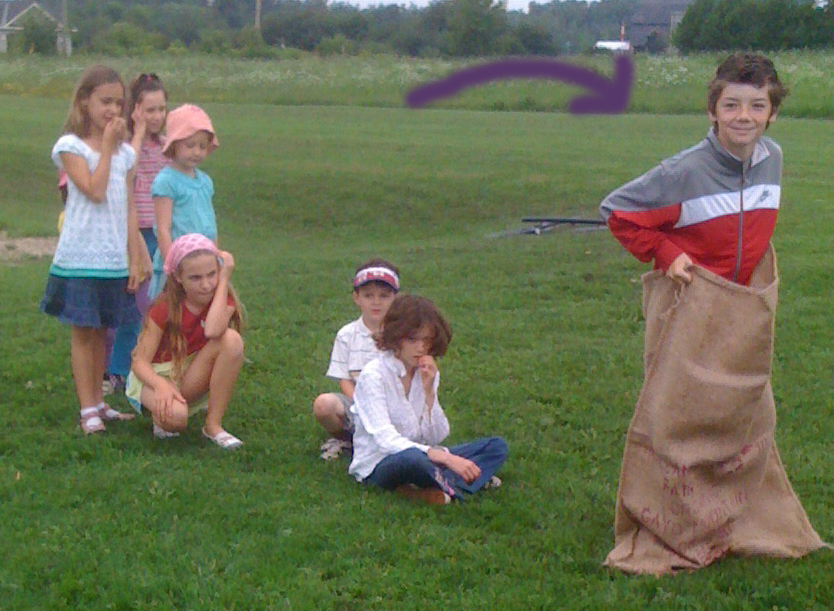
And this little guy here in the potato sack? He’s going to be STAFF this year.

That’s right, my little camper babies are growing up! For the first time this summer, we will have a CIT on staff who came through the complete ranks of camper, LIT, and LIT II. It’s an amazing feeling, and one I can’t wait to replicate again and again.

The best part was his description of returning to camp as an LIT II: “It was like home.” Your future campers are some very lucky kids!

0 comments

March Break, 2013 – Vacation @ Home!

marchbreak

Register now for March Break camp – fees include laser tag on Thursday!

Daily Themes:

Monday –  Run Away to the Circus

Tuesday – Explore the Rainforest

Wednesday – A Day at the Beach

Thursday – Space Camp!

Friday – Gone to Disney World (Also Pajama Day)

$40 per day or $160 for the week

0 comments

Jan 30: “Cabin Fever” PA Day Camp

cabinfeverPAday

Cabin Fever! Is winter, and all that extra time inside, making your kids climb the walls? We’ll take them off your hands! (And make sure they have a great time, too.)

Register now for next week’s PA Day camp! As always, siblings receive a 15% discount off registration.

0 comments

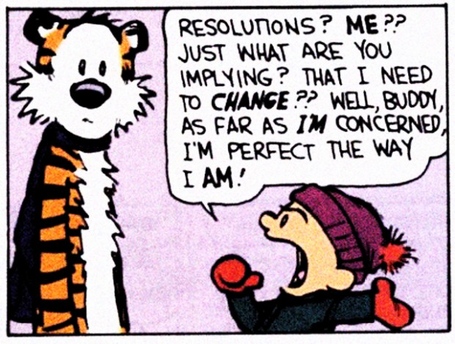
New Resolutions For Camp

I am so very proud of all that MKDC has accomplished in the last four years. It’s so fulfilling to see the changes in our campers as they mature from year to year, watching former campers’ confidence grow in the LIT program, and forming new friendships each year during staff training. But as great as it is to look back on all we’ve done, it’s also important to keep looking forward too: we’re just getting started! Here are just a few of the goals I have for 2013, to make our 5th Anniversary summer the best it can be.

For Campers

MKDC’s goal for our campers this year is to continue to improve our programming options. I’m looking at making some small changes to our daily schedule that will leave room for a special “Choose Your Own Adventure” program. Also, starting in summer 2013 we will be bringing in a nature specialist twice a week to help our campers become more responsible global citizens – more on both of these projects soon!

For LITs

Our Leaders in Training program is a “fast track” for former campers who hope to become counselors, but it’s also meant to help prepare them for the “real world” work force. We’ll be adding a job skills component to our LIT training this year that will help them learn to put together a resume, and how to present themselves as professionals when interacting with staff, parents, and other adults.

For Parents

Our 2012 parent surveys told us that parents would like more communication, so we’re going to do just that. We’ll be creating weekly newsletters throughout the summer, as well as a new system for tracking camper progress.

For Staff

I can’t understate the value that our staff bring to camp! Time and time again the most common answer to the question “What’s the best part of MKDC?” is “The staff!” With these superheroes as our most important asset, I need to make sure they have everything they need to do the best job they can. This year I’ll develop a better system for saving and retrieving programming ideas, and ways to pass on best practices from one summer staff to the next.

0 comments

Santa’s Workshop Sneak Peak

Just one of the projects planned for Santa’s Workshop this Saturday…

Do you know what it is?

0 comments

Dear Santa… I’m not a greedypants

I Want, I Need, I’ll Wear, I’ll Read

Found this on Pinterest the other day and I love it! It’s so easy, especially when you have littles, to end up going a bit nuts at Christmas. Without a clear plan, you can end up with way too much before you know it. Our two little guys are only just starting to make their own lists, but it’s still a great benchmark for us as parents to keep things in check. (Besides, they have grandparents on both sides who are going to spoil them up to their ears and I’d prefer to have a little space left in my house!)

For older kids that do make their own lists, having a guideline like this helps pare down the gimmies and force them to think about something other than just what the latest commercial convinced them they have to have. I especially like the idea of including reading material in the gift giving traditions – probably the teacher part of me, but it’s sooo important for reading to be viewed as enjoyable and not as a chore.

Actually, I think this is a good way for anyone to make their list. As adults, I think a lot of us have the opposite problem – we end up just asking for necessities and feel silly asking for something that is purely a want, or for setting aside time to read purely for pleasure. So, what is YOUR want, need, wear, and read?

0 comments

EMC News: Youngsters are elves for a day at Santa’s Workshop

Posted Nov 15, 2012 By EMC News


EMC News – Santa Claus will be coming to Perth in the annual parade on Dec. 1, but there will be some little elves hard at work that day as well.

Maple Key Day Camp will be hosting their fourth annual Santa’s Workshop for children ages four to 12, who will be busy elves for a day making gifts for their friends or family members.

“We set up a series of gift making stations, with supplies and a staff helper at each one,” says Kristen Widenmaier, owner and director of Maple Key Day Camp. “The kids get to go around to each one and learn unique crafts that can then be given as gifts.”

The elves are free to create at their own speed, moving from station to station to create their special gifts.

The day is rounded out with a few holiday games, a pizza lunch, snacks, ornament craft, and of course a gift wrapping and card making station.

What is an exciting day for the children is also great for parents. “Most of the parents take this opportunity to go Christmas shopping while the kids are with us,” Widenmaier says, “then they pick them up in time for the parade.”

Santa’s Workshop is being held on Saturday, Dec. 1 from 10 a.m. to 4 p.m. at St. Andrew’s Church in Perth. Spaces are still available, and advance registration is required. For more information please go to www.maplekeydaycamp.com or call (613) 464-2468.

Article originally posted on Perth EMC website

0 comments

A Better Advent Calendar

As soon as Halloween is over, the stores are swarmed with advent calendars. Winnie the Pooh, Dora, Ninja Turtles, you name it… all with those awful tasteless chocolates in them.

I’ve always loved advent calendars – even as a kid it was never really about the chocolate as much as the counting down to Christmas (ok…. maybe it was a little bit about the chocolate). But the store-bought ones are cheap quality, cheap tasting, and certainly don’t look very cute sitting out on the mantle. So I did a little browsing, and here are some goodies I found. Try making one of these with your family this year!

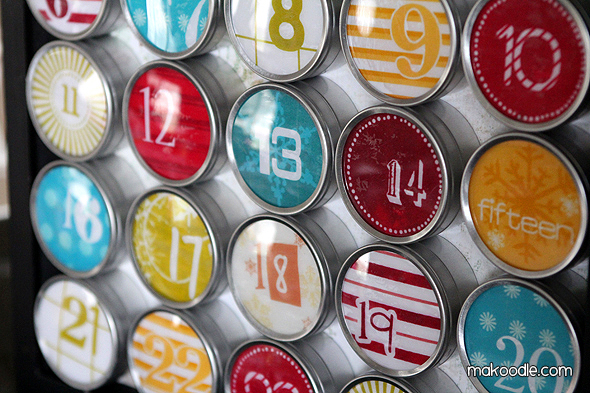
This advent calendar replaces the candy with holiday activities to do as a family.

This one is similar to the last, but a lot simpler to put together and you probably already have all the supplies in your house. A list of activities for this one too!

This advent calendar idea is so multipurpose – you can hang it as a garland, put them on the tree or scatter them all over the house. PLUS you can put just about anything in it (even books!) and it’s very reusable year after year.

If you are like me and are super crafty and actually have Mod Podge in your house, you might consider making this one (it DOES have printables!)

And because I’m all about doing more with less… an advent calendar made entirely from the recycle bin. Awesome!

And while you’re counting down to Christmas – don’t forget that Santa’s Workshop kicks off the countdown on December 1st.

What will you use as your advent calendar this year?


0 comments